Draft at 03/12/2025
This timeline, created during the 2025/26 season by former Skewen RFC Chairman Barry Davies (2005–2026), builds on earlier and more extensive archival work by Phil Richards and Eddie Young. Phil Richards’ documents were shared by local freelance travel and food writer Vicki Trott, and Eddie Young’s by his grandson Chris Davies.

Above image: Phil Richards

Above image: Eddie Young
According to Eddie Young’s transcript, Phil Richards wrote his history on the club’s 70th birthday in 1952/53.
1883 – Skewen RFC was founded.
Events of less significance were:
- Eruption of the Krakatoa volcano in Indonesia – one of the most devastating volcanic events in recorded history.
- The opening of the Brooklyn Bridge in New York City marked a major engineering feat. (On May 17, 2025, a Mexican Navy ship crashed into the bridge while leaving New York City.)
- The first run of the Orient Express, a luxurious passenger train, connected Europe to Turkey, ushering in a new era of travel.
- Liquid oxygen was produced for the first time. Svante Arrhenius developed ion theory to explain conductivity in electrolytes.
- The fifth cholera pandemic was raging killing around 250,000 people in Europe.
- Conflict between China and France over Vietnam.
- The author of Das Kapital, Karl Marx, died. The book was a critique of political economy.
- Germany’s national social health insurance system was introduced – 65 years before the NHS.
Player’s Navy Cut “medium” cigarettes were first introduced in 1883:

2025/26 – historical context:
- Russia’s ‘Special Military Operation’ in Ukraine that began in February 2022 was ongoing.
- In October 2023 a protracted conflict began in Palestinian-populated Gaza between Hamas and Israel. This followed an assault by Hamas into southern Israel where 1,139 people were killed. As of 06/11/2025 2025 over 68,875 Gazans had been killed, the majority were women and children.
- Convicted felon Donald Trump began his second term as President of the USA in January 2025. His campaign slogan – MAGA – Make America Great Again involved punishing tariffs on imports, mass deportations and the building of many new prisons to accommodate undocumented immigrants. By November 2026 his government was facing mounting challenges including a record-breaking government shutdown, health/senility speculation and political backlash following major Democratic victories in recent elections.
- Keir Starmer had been the UK’s Prime Minister since July 2024. Main challenges: economic instability, funding the NHS, illegal immigration, prison over-crowding, public sector pay, local councils going bust – to name just a few.
- The 30 MPH speed limit was replaced to 20 MPH in many urban areas of Wales but soon reverted to 30 MPH in response to public opinion.
- TATA Steel ceased traditional blast furnace steelmaking at its Port Talbot plant in 2024 but by the autumn of 2025 construction was underway for a new £1.25 billion electric arc furnace.
- In October 2025 Plaid Cymru won a Senedd by-election in the Caerphilly ending over 100 years of Labour dominance in the area.
- Having been empty for a number of years The Miners pub in Skewen reopened as a mini supermarket – Morrisons Daily.
1884 – a Skewen-based team played under the captaincy of Dr D.L. Jones. It made little progress and disbanded when the Doctor left Skewen for London.
1885/86 – a new team was formed and reached the final of the Mills’ Challenge Cup against Melyn Rovers on the Neath Rugby ground at Caer Gnoll. The then captain, John Hughes, was unable to play in the final so an invitation was sent to Dr D.L Jones to play at full back and also to skipper the side. William Davies, a speedy winger, scored the only try of the match. It was in 1886 that a Skewen side won The Mills Challenge Cup.
A ‘club’, as such, had not yet been formed. The side played their matches in a field (that would become a housing estate) near the entrance of Cardonnel Road.
1888/89 – the first reserve team was formed of which no playing records are available. Circumstances forced a relocation of games to Cae Penrally and the side struggled along with no pre-arranged fixture list, no gate receipts, no playing kit provided by the club and no prospect of any financial assistance.
1890 – the playing venue moved to Cae Marie Howells, the entrance to which was at the bottom of Stanley Road. The team had improved and entered the South Wales Cup competition that included the likes of Newport, Cardiff, Neath, Swansea and Llanelli.
1896 – another change of pitch, this time to Cwrt y Clafdy on the Neath side of Dynevor Road. It was at this time that the ‘Skewen Juniors’ was formed. They played their matches on Cae Drwm, a field near Baters Quarry, Maes-Melyn. Here the team played against “The Hafod” who were champions of the Swansea League at this time. This game was the match of the season and both teams prepared for what was to be a brutal encounter. As predicted, the game was a battle of attrition that ended in a pointless draw.
1897/98 – another relocation, this time to a field belonging to Cwrt-y-Clafdy farm at the bottom of Dynevor Road.
1899 – the team played its last match at Cwrt-y-Clafdy. Reference is made to a field on the Longford estate with another team playing at Werngoch field near Tennant Park known as Mooretown Rangers.
Two Skewen teams now played on the Graig field. They played in the names of Valva Boys and Dingle Boys which soon joined forces under the Skewen banner.
1900/01 – Skewen became an organised rugby club and the first officials were appointed though by 1903 the club still had no sources of revenue.
1903/04 – a ground was obtained on Burrows Road known as ‘Cae Lynch’. It was partly enclosed by hedges which gave an opportunity to charge an entrance fee of a few pence. However, as a playing pitch this new pitch was a complete failure: on rainy days the ground would be completely covered in water. On a more positive note, the activities of the club and its achievements appeared in the local press for the first time.
1904/05 – the side made excellent progress and had entered the Swansea 7 District League. But ,with an annual revenue from match days of around two or three shillings and a ground rent set at £4 a year the club’s financial position was poor.
1905/06 – yet another relocation, this time to an adjacent filed, Cae Wathen, but with the same rent though a much better playing surface.
1908 – the club became an affiliated member of the Welsh Rugby Union. With it came more attractive fixtures, better referees, and higher gate receipts. The first game, named Coedffranc Old Boys, played under the auspices of the WRU was on Cae Moule, a field where the Cefn Parc estate was later built.
1909/10 – at the end of this season one of club’s finest players, Tommy Davies, who had played for the Skewen club for seven years and with Neath for three years, was lured north: he joined Huddersfield Rugby League Club with signing on fee of £100 (worth over £14,500 in 2023/24)
It is worth noting that the first decade of the twentieth century saw a sharp rise in the population of Skewen: it grew from 5,410 in 1901, to 8,125 in 1911. The reason for this the Main Colliery Company opening up two new pits in 1903 and 1904.
1911/12 – Skewen born Howell Davies was selected to play for Wales against England in Twickenham and Scotland in Swansea.
1913/14 – an “abundance” of players were available and preparations were well in hand for a successful outcome the following season. The outbreak of war put an abrupt end to that ambition.
1914/18 – the WRU cancelled all fixtures under its name and any that went ahead were played under the name of the War Charities Act. A club was formed under the name of Skewen Colliers Boys (Charities) Rugby Club. A series of charity matches was a arranged between teams representing all pits in the Main Collieries, for example, No.4 pit v No.7 pit, Skewen. All players had to be registered under the War Charities Act and, unsurprisingly, raised money for charities. The games helped maintain morale in the village during this difficult time and lay foundations for better times ahead.
1920/21 – Skewen witness a great rugby revival on and off the pitch. There was an excellent fixture list, 67 vice presidents and the return of a second team. Both teams headquartered at the Colliers Arms and played their matches at Penyrally field. The young team was affiliated to the Swansea & district Rugby League and in their first season together reached the final for the championship of the league. Bridgend visited Skewen on October 9th, 1920, and went home losers by one try to nil. Gate receipts were just short of £200. On February 19th, 1921, Skewen played against London Welsh at Herne Hill. Skewen won by 11 points to 6. The village hailed these great players with a song – ‘The Black and Amber Boys’.
1921/22 – in spite of the great successes during the previous season the club carried forward a deficit in its balance sheet amounting to hundreds of pounds. The number of Vice Presidents shark from 67 to 24 and season ticket prices rose from 10/6d to 15/0d. Fortunately, most of the players remained loyal to their club and beat the Swansea all-whites by seven points.
1922/23 – the number of Vice Presidents increased and the number of season ticket holders increased significantly. Skewen lost the first game of the season 9 points to 3 points away to Aberavon. The second game was played against the newly-formed and nearby National Oil Refinery. Skewen ran out victors by 21pts.
It was during this season that the Glamorgan County Police Team made its first visit to Skewen. Their players towered over the Skewen 15 who – by guile, not strength – ran out victors by 11 points to 9 points. On April 10th 2023 Skewen hosted Aberavon and beat them 39 points to 4 points.
1923/24 – a new ground transaction came with another list of guarantors for a sum or £500 and every person elected as officer or committee member of the Club was compelled to sign a list of guarantors at the bank. The Welsh Rugby Union requested the Skewen club to produce a set of accounts:
| Total outstanding accounts of Club as end of season 1923/4 | £416.0.0 |
| Guarantee to Bank per 8 Guarantors for London trip | £250 0. 0. |
| Guarantee to Bank per ground Guarantors for Lease | 501.16.8 |
| Total | £1,167.16.8 |
1924/25 – the guarantors took full charge of the club’s affairs. The committee divided into three sub-committees: finance, selection and ground. On 24th September 1924 Skewen RFC left the Colliers Arms at 07.00 in an open charabanc bound for Swansea docks – similar to the one in the photo below. Here they boarded a ship to take them to their first recorded game ‘overseas’ where they won 12 nil against Barnstable. After-match festivities were “memorable”.

At the end of this season Skewen hosted Swansea All Whites for the first time. Skewen won 3 points to nil and ended the season having played 45 matches – won 40, drawn 11, lost one. Points for 434, against 95.
It was during this season that Skewen had an away fixture against Treorchy. The driver of the charabanc made it known he did not know the way, so the club’s treasurer agreed to sit alongside him with a map. They became completely lost. At around 7pm that evening, several hours after the scheduled kick off time, the charabanc glided gracefully into the Rhondda Valley town flanked by road lights and shop with shutters closed. The match was replaced by an impromptu concert with entertainers from both clubs helping to make the trip a great success. Everyone left in jovial spirits caring little whether or not the driver could find his way back to Skewen.
1925/26 – began with the same management as the previous season. However, it became quite obvious at the AGM that the new method of running the club had become unpopular with club supports; there was a significant drop in the number of Vice presidents and season ticket holders. Gate receipts fell and many players left the club. The squad now consisted mainly of younger players who, despite their youth, held their own against many crack Welsh Union Clubs of this period.
1926/27 – Skewen lost away to Weston-Super-Mare on Boxing Day. The Somerset club was considered the best in that county at this time and the hots won 27 points to 12 points. The visitors spent a great evening with their hosts and returned home in good spirits and a handsome cheque from the sporting Weston club. During the second half of this season it was difficult to raise a full side. On a brighter note, the junior side reached the final in their cup competition. Although losing 8 points to nil to Trebanos the youngers did not disgrace themselves: the Swansea valley side were considered one of the smartest teams in the Swansea and District League during that time.
1927/28 – most of the early twenties team had now retired from the game, including Dr Tom Reason who had captained the side for eight seasons. He had been a great player, a popular captain and was credited as one of the greatest sportsman in the village.
1929/30 – the guarantors now realised that it was fatal to continue running the club with any hope of saving them from their obligations to the bank. A new committee was formed. The club had to forego popular fixtures in order to curtail travelling expenses. Clubs that had visited Skewen in the early twenties and attracting huge gate money amounting to £100 and over were now drawing agates of less than £10 a match. Aberavon’s visit to Skewen earned gate receipts of £2.16.0d. The fixture with Neath drew £8.10.0d. Swansea however again honoured the village team with a £20 guarantee match at St Helens. This helped Skewen limp though to another season.
1930/31 – a young side showed promise and gave a good account of themselves in two matches against Cardiff. Neath granted Skewen a match having already defeated Maesteg, Aberavon and Swansea, but just scraped home against Skewen 3 pints to nil.
1931/32 – the opening game of this season was at the Gnoll against a Neath side with a few of their experienced internationals on show. There was also a game against Cardiff at the Arms Park where Skewen won raise for displaying their exciting brand of open rugby. Home gates were attracting bigger crowds and gate money. Four Youatt brothers played in th team at the same time. Skewen lost at St Helens 7 points to 6 points.
1932/33 – encouraged by a splendid display against Neath, Skewen went on to win their next 10 games scoring 118 points while conceding only 44 points. The club’s greatest win during a run of successes was a nine try triumph against Ystradgynlais.
1933/34 – during this season the Youatts again made history by fielding six brothers against Cwmllynfell making up the four threequarters and two half backs.
1935/36 – Skewen moved to its present home at Tennant Park. In the same season changing rooms were constructed on the site with the help of players and committee members.
There’s is a poignant gap in the list of captains on a wall in the club’s main hall. World War 2 was declared in September 1939 and, for the second time in the history of the game, the Welsh Rugby Union cancelled all fixtures for the duration of the war years 1939-45.
1945/46 – Skewen RFC was one of the first clubs to re-form after hostilities ended. Captaincy was bestowed on Ivor Rowlands who, at 19 years of age, had the distinction of being the youngest player to captain a Skewen team. It is unfortunate that no records exist of the results of this post-war club on the playing field.
1946/47 – the committee, which during 1945/46 consisted of 10 members now dwindled to three.
1947/48 – the Club had another difficult season – it was now at its lowest ebb both on and off the field. Neath hosted Skewen in a match aimed at improving the away club’s finances. Although losing 64 points to nil, the biggest winner on the days was Skewen’s bank balance.
1948/49 – records suggest there had been as much robust action off the field than on it. A new, larger committee emerged and a match was arranged to take place on Christmas morning between past and present players. Attendance resembled the good old days and there was camaraderie among players, committee and supporters. Played 33 matches, won 21, drawn 5, losses 7.
1949/50 – efforts were made to erect a shelter on the ground for the comfort of spectators. The team worked its way to the final of the West Wales Championship Shield; Skewen v Tumble at Gowerton RFC. Tumble won 11 points to six points.
1951/52 – another benefit match at The Gnoll. In spite of a creditable performance Skewen lost 22 points to nil, but the club’s treasurer was happy. Skewen played Crynant in a semi-final at The Gnoll. The match ended in a draw and a replay was held at The Gnoll. This game ended three points each with a penalty for Crynant and a try for Skewen – then worth three points. The third tie took place at Ystradgynlais: Skewen won 14 points to twelve points – against after extra time. Both teams had fought hard during the three campaigns and players were complimented by their sportsmanship and conduct toward one another. The final must have been an anti-climax: Skewen easily beat Cwmgorse at the Vardre rugby ground 12 points to nil. A grand final was now to be played by the winners of the Shield and the League’s cup winners. Known as the ‘All Winners’ Cup’, The black and ambers were now up against Loughor at Gorseinon. Skewen won an evenly fought battle three points to nil.
1952/53 – Skewen RFC reached its centenary year. Its president was a man of the cloth – the Rev. Canon J.R. Richards (who may have converted many). The following season saw three Skewen-based police officers join the club, one of whom was Rod Morgan who later became a member of the Welsh International Selection Panel, known as ‘The Big Five’. Six of the players at this time went on to captain the club – Elwyn Batt, Eddie Young, Norman Bater, Malcom Jones, John Morse and David Rowland.
1958/59 – according to Eddie Young, at the end of the 1958/59 season, a squad from Skewen went to Manchester to play against Burnage and Ashton-under-Lyme. After the game against Ashton, the hosts challenged their visitors to a ‘boat race’. Such races are often as competitive as the games that precede them.
Replicating the annual – and arguably less competitive Oxford/Cambridge boat race – there are eight seasoned drinkers in each team. Each drinker has a pint glass full of their favoured tipple and a referee begins the race. The first drinker on each team is allowed to pick up their drink and begin drinking. Once the content is consumed (deliberate spilling is penalised) the drinker must place the empty glass upside down on their head. This is the signal for the rower behind him to start drinking his pint.
What the Ashton crew did not know was that the Skewen team had a remarkable hidden talent at their disposal in the form of their diminutive fullback, Joe Phillips. Although only 5ft 4ins and weighing around ten stone soaking wet, his party trick was to demolish a pint in less than seven seconds. Joe was the anchor man and managed to pluck a victory from the jaws of defeat.
But Ashton was to have the last laugh.
On requesting information on the best nightspot to visit on their last evening in the area the hosts directed the Skewen players and supporters to an establishment in a back street of Manchester that required a sequence of coded knocks to gain entry. That alone should have flashed up warning signs.
Entry was duly obtained into what was a dimly lit dance hall with a bar running the length of a wall.
A player in the Skewen party had noticeably large hands, capable of catching a rugby ball with one of his large paws. One can imagine the shock he received when a teammate quietly drew his attention to the hands of the deep-throated ‘female’ with whom he was in deep conversation and who had been accepting his offer of one drink after another.
He had not noticed that s/he had hands that matched his own.
Chaos erupted causing the entire Skewen party to flee the premises en masse followed by a crowd of men in frocks and heavy make-up.
1959/60 – there were 51 Vice-Presidents “with the majority being the professional and business people of the village, a truly impressive support for the village club.”
1961/62 – the fact that the end of this season saw the club “resting in a mid-table position of 18th” shows how many clubs there must have been in the league at that time.
1960/61 – this season saw Skewen drop to 24th in the league and “…it would take a considerable period of time to re-adjust to the demands of the new era….(in which)…development at Tennant Park was on-going from the early fifties, when players and committee undertook a major project to build a boundary wall and gate house running the full length of the ground alongside the existing dram road[1] on the western side of the ground.”
1964/65 – it is recorded that this season was memorable for the transfer of the club’s headquarters from the Traveller’s Rest Public House that had been the home of the club since 1936. All committee meetings and after-match functions had been provided at the upstairs function room. The reasons for leaving this venue “are lost in the realms of time. However the base was now transferred to the Queens Hotel in Queens Road, the proprietors being Mr & Mrs Jones who were exceptional hosts in all respects…” The team obtained “a creditable position in the league[2].”
1965/66 – The bi-annual Twickenham trip took place again this season…a fixture had been arranged to play Bromsgrove at Richmond park on the morning of the international… true to form, the heavy socialising the previous evening created a bizarre incident immediately from the kick off. Eiryn Lewis, the Skewen inside half, called for the ball and a mark, only to see the ball land a good five feet behind him.”
A request to explain what had happened was met with an honest response: “Well, I could see two balls coming my way and decided the nearest one was the easiest of the two. Unfortunately, it was the wrong one…”
At half time, Skewen was losing 15pts to nil to a more abstemious Bromsgrove XV. However, according to Mr Young: “The mists of the evening before cleared…(and Skewen)…ran out worthy winners by 18pts to 15pts. To make things even more enjoyable, Wales defeated England on their own ‘Cabbage Patch’ by 11pts to 6 pts.”
[1] The Skewen Dram Road was a 3 miles long railway built to take coal from Dyffryn and Bryncoch to Skewen Wharf. It was owned and operated by the Main Colliery Company, the successor of the Dynevor Dyffryn and Neath Abbey United Collieries Company. (Source: Wikipedia)
[2] Eddie Young wrote: “The West Wales Championship structure was recognised in this era as a particular had league to compete within.”
1966/67 – Councillor Martin Thomas was the Club’s President and the officers were:
Chairman – Arthur Hughes
Vice Chairman – Glyn Williams
Hon. Treasurer – Edwin G. Young
Hon Auditor – G. Rollings
Hon. Legal Advisor – David Morris
Trainer – Cyril Pugh
Groundsman – Viv Lewis
Having been awarded international caps at Schools and Youth level, David Rowland returned to the club after playing with distinction for Swansea and Aberavon for a number of seasons. He was elected both Club Captain and Club Coach.
David was re-elected to these positions the following season when the facilities that had been constructed in the 1935/36 season were replaced by those that continue to be used today.
1969/70 – Three newly elected committee members were installed including Harry Tristham, who went on to become Club Chairman[3].
1972 – In September of this year Gareth Edwards[4]’ then boss, Jack Hamer, was asked by French Rotarians to send a side across the channel for a special match to be played at Montluçon in central France. There was a small problem, however. Welsh Rugby Union touring regulations meant the team could not travel as the Jack Hamer/Gareth Edwards XV, so someone had the bright idea of inviting two representatives from Skewen Rugby Club, their chairman and their scrum half, Johnny Jones.
[3] Harry’s grandson, Dr Richard Tristham was installed as club Chairman in 2014.
[4] Considered by many to be the best scrum half the game has ever known.
This enabled the team to become a bona fide expedition. For the next forty-eight hours Skewen RFC boasted eight internationals, a handful of Barbarians and six British Lions. In spite of this, the Skewen XV were 18pts adrift after 15 minutes and the town’s Mayor was about to declare a public holiday. But things were to change dramatically.
In a second half, described by Edwards as a feast of “unbelievable rugby”, passes went to hand, reverse scissors were timed to perfection and so masterly was the visitors control in mid-field the final score was 52 pts to 22pts in Skewen’s favour[5].
There was no public holiday in Montluçon.
[5] Source: Gareth Edwards’ Most Memorable Matches. Stanley Paul & Co. Ltd 1984
1978

On 11/04/1978 the Skewen Rugby Football Supporters Social Club and Institute was registered as a Working Men’s Club under the Friendly Societies Act 1974. 27 pages of small type containing numerous clauses, including a right to make By-Laws and Permitted Hours for Supply of Intoxicants.
1978 – Denzil Terrance Bennett (aka ‘Sammy’) captained the Skewen Youth Team. He is the only person to have played for the 1st, 2nd and Youth sides in the same season. Sammy was 28 at the time! In mitigation for the transgression regarding his age at the time he captained the Youth, Sammy explained that they were short of players on a particular occasion and he had agreed to step in so that the teams had even numbers.
1981/82 – O.G. Davies XV versus Neath
Skewen players Richard Baker and David Glover were selected to play for the O.G. Davies XV game against Neath in February 1982. It may be of interest to note that entry to the game was 15p and that Skewen had two substitutes, one more than Neath.
Skewen Juniors 1980 – 1985
The teams that played in the 1980 tournament can be attributed to the hard work of Trevor Hearn who in the previous 2 years had campaigned the committee of the day to start a junior section, in the early years the team was made up of a mixture of players ranging from 8-10 years of age, Trevor alongside Glyn Davies and aided by Clyde Ball arranged kit, transport and food to kick start this era of the Club.
This was a side mainly combined of Coedffranc and Skewen Lower Primary school pupils with Lloyd and Ceri from Clyne and Resolven, they played in the Afan Nedd U11 invitation tournament at Skewen and won every game by a considerable margin, they were coached by the Neath Schools teacher David Davies, the team continued that year and went on an unbeaten streak before disbanding at the end of the season as players went onto comprehensive school.
During that year Coedffranc school won the Neath Schools 15 aside and 7 aside tournaments which were held at the Gnoll and were runners up at the Glynneath 9 aside, with Lloyd and Jason representing West Wales U11 beating East Wales at the old National Stadium.
From that team both Lloyd Issac and Jason Ball represented Neath, Swansea and Bridgend, with Jason also playing professional football for Arsenal and Swansea City.
The team nurtured 3 senior players, Ryland, Cerith and Jamie who all went on to play for the senior team with Grant Weekes and Jamie Ball both playing at Penarth during their time in the National League. Jamie returned to Skewen, representing Central Glamorgan and played on until his 43rd Birthday coaching the team for 17 seasons. Ryland Lopez is the current president of the Club.
Photo 1 – taken in 1980 at the same Afan Nedd 15 aside tournament, the team is mainly comprised of Dwr-y-Felin school friends from Coedffranc and Skewen Lower, the team stayed together from U12 through to youth in the final photo.
From this team 5 players went on to play senior rugby for Skewen with Chris Adey going on to represent Maesteg and Central Glamorgan in a number of matches.

Photo 2 – this was taken at the Gnoll in 1984 during the Neath U16 tournament – 6 of this team continued on and player senior rugby for Skewen. The team were coached by Ken Thomas who himself was a senior player at the time.

Photo 3 – This was a taken at Skewen in 1985 and was the first youth team Skewen had fielded for a number of years, and was made up from 7 players who had represented Skewen in the U12 team in 1980, notable players who went on to play over 300 games for Skewen would have been Richard Ball who was also club captain for 5/6 seasons, and then went on to coach for a record 18 seasons, taking the team to the Championship, the club’s highest ever position. Other notable players were Lloyd Davies who went on to star in and win Opportunity Knocks.

1995 – in May of this year Skewen RFC spent a week in Toronto playing two games: Toronto Welsh[6] and a Police side called Wild Boar[7]. During the visit visits were made to Niagara Falls, C N Tower and the Sky Dome. Watering holes during the stay included The Loose Moose[8] and Philmo[9].
[6] In 2003 Toronto Welsh RFC was founded in 1961. In 2003 it combined with the University of Toronto RFC to form a new team – Toronto Dragons RFC.
[9] https://restaurantguru.com>Philmo-Bar-Lounge-Toro
1997 – again in the month of May a squad and supporters spent 10 days in Edmonton and Calgary. Skewen played in the Edmonton Rugby Festival and won the final 7 points to 5 points with Matthew Arbourne winning the game with the final kick of the match. Visits were made to the Calgary Olympic Park, to Banff, and many participated in a few rounds of golf near Calgary.
Over 30 players and supporters went on each of these Canada tours.
2005 Following some disharmony within the committee Treasurer, Morris asked Barry Davies to become club chairman. Barry was a relative newcomer to Skewen having moved to the village in 1999. Although having become a spectator, Barry had not served on the committee and felt unsuited to take on this role. For Steve however that was precisely what he sought: someone not unfamiliar with chairing meetings but who had not been involved in any of the squabbles that had blighted the governance of the club. Knowing he had Steve’s support and that of the then club secretary, Neil Ranft, Barry agreed to chair meetings on a temporary basis until a permanent chair could be found.
It may be of interest to note that the term ‘chair’ was now the vogue among organisations keen to shake off an outmoded gender-based language and adopt more inclusive terms.
By the season 2025/26 Steve Morris had been Club Treasurer for 33 years – surely a record in Welsh community rugby!

Steve Morris – October 2025
The term ‘women’s section’ often referred to an expectation that women would take on domestic roles linked solely with cleaning and catering. Three women joined the committee, one of who (reluctantly at first) was Rachel Hopkins who, in April 2012 became (again, reluctantly at first) the club secretary. Committee members received high quality minutes early on every Wednesday morning following the Tuesday evening committee meetings. They were often circulated within an hour or so of the meeting itself.

The executives (left to right) taken in Llanharan
John Grimes – Vice Chairman and fixture secretary
Dr Rich – Chairman
Rachel Hopkins – Secretary
Steve Morris – Treasurer
Gaynor Hopkins (aka Bonnie Tyler)
Born in Skewen in 1951, Bonnie Tyler starred in a talent contest when she was sixteen years old at Skewen Rugby Club. She came 2nd to a man who played the accordion. Undaunted, she went on to make numerous smash hits including Lost in France, It’s a Heartache, Total Eclipse of the Heart and Holding Out for a Hero.
Perhaps the pinnacle of Bonnie’s career came in the 2007/08 season when she became President of Skewen RFC, a position she held until 2012/13 when Rylan Lopez took over the Presidency.
Bonnie was invited to the club as was Ryan Jones. When introduced to Ryan by Barry Davies, Bonnie looked up at the 6ft 5 inches at the then Wales captain and said: “You’re a big man, I bet you play rugby.” Ryan replied: “yes, a little”. During the meeting Bonnie sat for a while next to Clyde Ball, then a Committee member. (Bonnie and Clyde were infamous American outlaws during the Great Depression, known for a violent crime spree that captured national attention between 1932 and 1934.)
In July 2026 we learned of the sad death of Bonnie Tyler, known to many in Skewen by her birth name ‘Gaynor Hopkins’.
Bonnie was the rugby club’s President from 2007/08 to the 2012/13 season and is pictured below with club chairman, Barry Davies, and the Manager of Mercedes, Swansea, our main sponsors at that time.

In 2008, Bonnie, who had made her home in Portugal, took up the offer of a visit to the club to meet committee members and others. Barry asked the then Welsh captain Ryan Jones to attend.
Ryan and Barry stood on the steps of the main entrance with a great sense of anticipation awaiting Bonnie’s arrival.
An old Ford car came around the bend into the car park followed shortly after by an even older Vauxhall. The waiting pair did not need a close look to see who was in those vehicles. A few minutes later however their eyes opened wide at the sight of a powder-blue Bentley convertible gliding majestically along the rutted tarmac.
Barry introduced Bonnie and Ryan to one another. Bonnie craned her head to address Ryan: “You’re a big boy; I bet you play rugby.”
“Yes I do”, was Ryan’s modest reply. Barry explained to Bonnie that Ryan happened to be captain of the Welsh Rugby team.
After Bonnie had mingled with those assembled in the lounge she asked Barry to take her into the hall. The moment she stepped inside Bonnie’s face became a picture of wonderment. She said, as though to herself, that the last time she had been in the hall she was just 16 years old, and had entered a talent contest. Bonnie recalled having come second to an elderly gentleman who had played an accordion.
The irony of this was not lost on those who were later told about Bonnie’s encounter with her past; some could even remember the name of the accordionist, once affectionately known as ‘Eddie the Talking Horse’ whose grandson Paul was a first team prop in 2008.
Steve Morris
By the season 2025/26 Steve Morris had been Club Treasurer for 33 years – surely a record in Welsh community rugby!
2015 A weekly Tote was introduced. £1 buys a choice of three numbers drawn out of a hat every Tuesday evening prior to the committee meeting. Along with other money-raising initiatives it helps keep the club afloat financially. Jack Tristram is responsible for selling many of the tote tickets and for getting local business people to pay for the privilege of adverting their services on digital billboards around the main pitch.
2016 Community rugby clubs in Wales were advised by the Welsh Rugby Union to become incorporated as private companies in order to protect members from potential financial and legal issues that may occur. Finance accounts are submitted to Companies House every year. Incorporation allowed Skewen RFC to become a Community Amateur Sports Club with benefits including the potential for a range of tax reliefs, including Gift Aid, where qualifying conditions are met. SRFC became incorporated on 19/10/2016.
Following on from incorporating, off-field work continued to improve with the production of key policies and protocols, strengthening of general governance, a development plan, risk assessments, safeguarding and player/member registers.
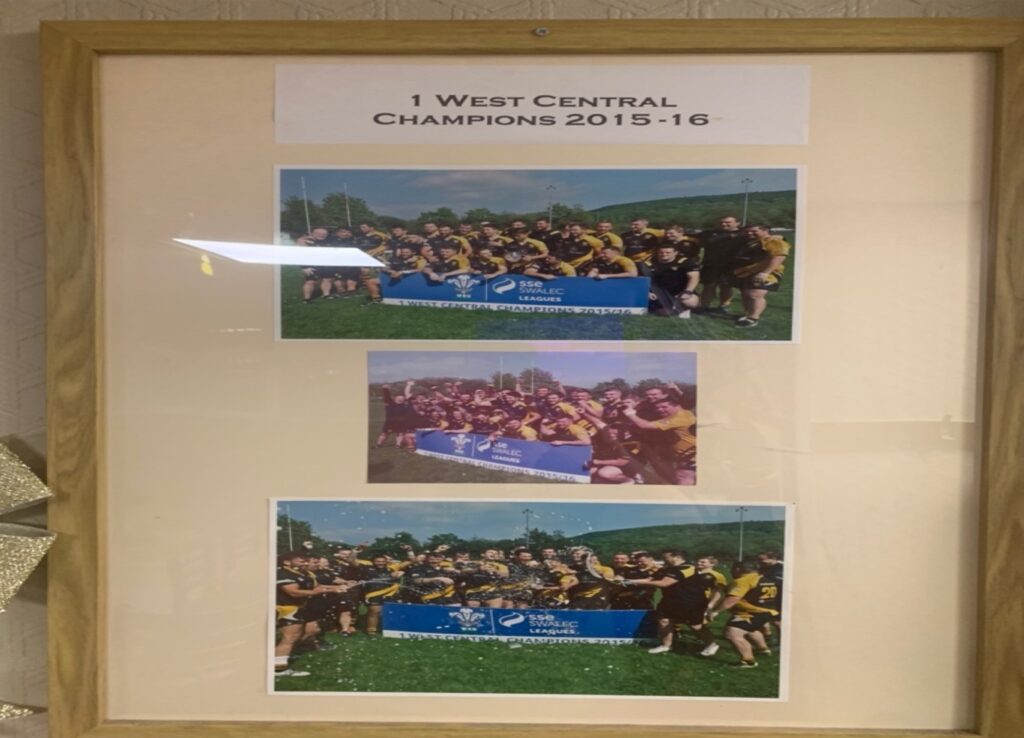
2015/16 Skewen RFC were champions of division 1 West Central and gained promotion to the National Championship league which had been reformed by the WRU in 2012. Being promoted was an excellent achievement but staying up after the end of the season 2016/17 season was an even greater achievement given that fixtures included games against the likes of Pontypool RFC.
Skewen performed well in the four games played against ‘Pooler’ during these two seasons and both opposition players and coaching staff congratulated Skewen on their robust performances. Word had it that around this time some squad members of Newport Gwent Dragons region transferred to Pontypool for better money.
2018 – just before Christmas 2018 Skewen RFC was short of players. The club had helped out an ailing Neath RFC and they returned the favour by allowing Skewen to permit two of their players, one of who was non-other than Kiwi-capped Regan King who had played against Wales in 2002. As well as his modesty, King – at inside centre – was best known for finding gaps for other players to run into and for giving a telling pass at the right moment. People like him make a complex game look easy.
Some of the Waunarlwydd (often referred to as ‘one eyelid’) opposition players ran at him hard and sometimes late, but King maintained a regal poise and just got on with it. After the game, which Skewen won by 31pts to 7pts, King stayed on mixing with his team-mates and opposition players over a few beers and a post-match meal.

Regan King presented with a framed shirt by Club Chairman Dr Richard Tristham.
Photograph courtesy of Wales Online.
2022/23
Skewen Barbarians (over 35s)
During a cup game at Tennant Park in October 2022 against Waunarlwydd (pronounced ‘one eyelid’ by some), Neil Morgan and Geraint Davies chewed over an idea about local clubs setting up over 35s touch-rugby teams. Rob Jenkins and Scott Pickin were soon roped in and helped bring about the creation of a veterans side named ‘Skewen Barbarians’. It was captained by club stalwart Jonathan Vigors and managed by Scott Pickin, founder and operator of the Skewen Commentary Group.
A WhatsApp[10] group was formed and soon there was a squad of 72 players, a mix of former players and new recruits. Most of the Skewen Barbarians had played youth rugby under the tutelage of Max Wiltshire (16/07/1938 – 18/09/2021) who won four Welsh caps and was himself a Barbarian. Soon after he died a photo of Max was inserted into the glass of the door to the club’s lounge.
[10] Founded in 2009, jointly founded by Jan Koum, a Ukrainian immigrant to the USA, WhatsApp is/was a free messaging and video calling application which, in 2023, had two billion users in 180 countries.
Barbarian. Soon after he died a photo of Max was inserted into the glass of the door to the club’s lounge.

Writing this history in the season 2023/24 it is difficult to measure the impact Skewen Barbarians is having on the club as a whole. It is a great deal more than the sum of its parts. A large group of men and their families have been drawn back to the club leading to the creation of a development team including several Barbarians.
Jonathan Grimes (former Skewen player and son of the current Vice Chairman and linesman John Grimes) works in Oxfordshire. In the summer of 2023, this contact led to a home game against Harwell RFC. The outcome of the game and the ensuant boat race remain a matter of opinion, depending on which side of the Severn you come from.
A return fixture soon followed and below is a photograph taken following that game with the random mix of players personifying the spirit of rugby.


Jayden, Jonathan, John (Vice Chairman & Fixture Secretary), Chris (1st Team coach from 2025/26), Callum (1st Team Vice Captain)
Covid-19
First detected in Wuhan, China[11] in December 2019, Covid-19 soon became a pandemic. All rugby-related activities were ceased in March 2000 and grass roots rugby was suspended for around 18 months. But, like a Phoenix, Skewen RFC came out of the enforced hibernation and grew from strength to strength.
[11] China was also the origin of The Black Death in the mid 1300s. It spread along trade routes westward to the Mediterranean and northern Africa. It reached southern England in 1348 and northern Britain and Scandinavia by 1350. The epidemic killed 30 to 50 percent of the entire population of Europe.
Life Saving Defibrillator
Installed at the club in November 2021, a defibrillator can give a high energy shock to the heart of someone who is in cardiac arrest. We hope never to have to use it.

Live-stream rugby
On February 26th, 2022, Artificial Intelligence (AI) was deployed in the form of Video Enhanced Observation (VEO) – tracking technology.
AI software detects the ball and gives a recording of an entire game after which we can capture highlights and download them for training purposes and for sharing with coaches, players and supporters.
On February 19th, 2022, Committee member Scott Pickin delivered his first match commentary to the Skewen Commentary Group. It is listened to by ex-pats and holidaymakers in the four corners of the world. (Check out blow Scott’s commentary of Skewen RFC v Ystradgynlais RFC in April 2024!

A robot arrives:
The start of the 2022/03 season saw the use for the first time of a robotic line marker operated by Reece Jenkins. Reece came through the age groups and remains a player, grass-cutter and overall stalwart at Skewen RFC.

Via GPS (Global Positioning System), the robot receives signals from satellites and performs calculations to determine its exact position on the surface of the pitch. By measuring the time it takes for signals to travel from the satellites to the receiver, the robot can calculate the distance to each satellite.
2023/24
The first encounter of the 2023/24 season against close neighbours, Birchgrove, saw the robot’s use of what’s known as ‘pitch branding’. The letters SKEWEN RFC were writ large into the grass near the clubhouse. The VEO saw Skewen win a closely contested game 14 points to 11 points.


Reece Jenkins – robot operator with keen supporter Cllr Mike Harvey
Reece’s rugby journey – in his own words:
“All started when I was 8 years old, my best mate who I sat next to in class asked me to come along training . It just so happens his dad was one of the coaches , his truly Mike Harvey . I went up on a Wednesday night and back then all the age grades trained on the one main pitch under lights , as you can imagine it was manic but brilliant atmosphere to with so many people everywhere . Mike was there with. The other coach Wayne jones, and we went on until around under 13’s . I was keen with karate for years to up until under 11’s , but I opted for rugby full time as I felt a bit let down with the karate ( little did I know at the time I was overlooked as the alternative was me fighting grown men ) we continued until under 13’s where unfortunately the team folded .
Under 15’s – lads in school rallied round and we got the team back together. Big John took on the coaching role and we continued until youth . I was 1 of 3 that went into youth of my age group , me chunky ( japs brother ) and Bevan .
Tart and Leighton coached me for 3 years with loads of success , majority of my first two years was on the bench , I was a 5”10 12 stoner who struggled but I just enjoyed being part of the team and having that something to do . During this time is where I pretty much met all of those who I associate with today, including my wife who I first met when I was around 18-19 years old (3 rd year youth ) and all my ushers , best men to go with it .
Seniors – went into seniors with 1 or 2 games under my belt , petrified in those games but Neil Morgan took me under his wing and looked after me shall we say. seniors I continued with the seconds and enjoyed the experience and laughs although we didn’t have many games but during this time I managed to go on the bench a few times with firsts . my first memory of 1sts is Nantyffyllon away , midweek hammering down with rain . Horrid !!!!
I was hooker at the time and I remember Rich ball saying I needed to work on my scrummaging, which is why I was overlooked ( which I agreed with )
During this time though I went to 6” and 18 stone , the. mark jones left and I remember him telling us in Ystylafera after a game . Rich then phones me and says “ I think you be ideal prop“. This made me laugh at the time as I needed to work on it but anyone who knows Rich and I what he did for the team during his time is his man management was on point and he knew how to get the players committed!
20 years later , captained 2 seasons and played in every position at a point in the pack I decided to call it a day, Covid , 3 chairman , 7 senior coaches as a whole, 32 years with the club . I’m into my 23 year having played senior rugby every season for Skewen only having a spell away during mid-season, completed my coaching badge 17 years ago and progressed from coaching kids rugby , ladies rugby to now youth, done my bit on and off the field including organising a presentation and with the help of long time Skewen supporter Russ ( aka dad ) I have done the best I can whilst trying to juggle family and work as a young man, I even had my in labour wife wait for me out side whilst I attended a pre-season meeting.”
Cost of running Skewen RFC (2023/24)
What many perhaps do not appreciate is the effort that goes into financing a community rugby club such as Skewen RFC. No one knows this better than Steve Morris, Treasurer of the club since November 1992, and still exchequer at the time of writing i.e. end of season 2023/24.
Below is a table that shows the increase linked to the main items of expenditure over just one decade: from season 2013/2014 to 23/24:
| Budget item | 2013/2014 | 2023/2024 |
| Physio/Medical | £1523 | £3015 |
| Food/bar bill | £2186 | £5159 |
| Electricity | £1600 | £2500 |
| Water | £480 | £666 |
| Insurance | £1985 | £2500 |
| Laundry | £590 | £990 |
February 2024 – extract from committee meeting minutes: “Clyde (Ball) announced that he has made the decision to retire from the Committee. We would like to thank Clyde for his lifetime commitment to Skewen RFC, 40 years is a very long time to be involved in the business end of any club! From his involvement with the mini and juniors through to seniors he has been a constant, bringing through 3 sons, a grandson and a great grandson. Clyde deserves his retirement and as a Life Member is welcome to call into meetings, we really hope that he will continue to attend games and not become a stranger. Well done Clyde for your dedication, you have certainly earned our thanks and a place in the history of Skewen RFC.”
Season 2023/24
March 2024 – David Daw and Tom Cooksey and visited the club. Tom was a Heritage Master’s student on placement with Dave, archivist at Swansea (St Helen’s) Rugby Club. They were striving to bring archives into the public domain – a mission shared by Skewen RFC and the Skewen Historical Society[12].
Tom and Dave had a particular interest in the rugby ball on display in one of our cabinets. It was stitched together by Bill Beynon when he was a held in a Japanese prisoner of war. The main causes of death were malaria, dysentery and starvation and the ball was made from boots whose owners had no further use for them. The Imperial War Museum had expressed an interest in this Skewen RFC heirloom but it will remain in the clubhouse.
On a more positive note, this visit by David and Tom marked the start of a mutually helpful collaboration between Skewen RFC and Swansea RFC.
[12] www.skewenhistoricalsociety.org.uk
Minis and juniors
As at 2023/24 The minis and junior section is thriving at Skewen RFC. The section is run by volunteers who are all WRU certified and fully DBS[13] checked. There were over 270 children registered and age groups from U5’s through to U16’s.
The section was headed by the minis and juniors chairman, Carl Jenkins. He had been in this post since 2021 and his vision was to ensure that the children had a positive experience in the sport and to develop the teams for the future. In August 2023, 20 tag leaders courses were provided for the U16’s players. It was hoped that some of these players would become the coaches of the future at the club and help to develop the skills of younger children.
The juniors secretary was Scott Pickin and the treasurer and safe guarding officer was Victoria Dunsford. The threesome worked together to make sure that the minis and juniors teams had what they need to be a success.
In 2023/4 there were 48 volunteers that ran the sections with 11 team managers and 37 coaches / referees registered. Without these volunteers Skewen RFC would not have been able to have such a successful minis and juniors section.
All teams used Tennant park to play their games which were held on Sunday mornings and arranged by fixture secretaries, Martin Evans and Kyle Green. Indoor training was provided for the younger children to make sure they continued to enjoy the sport during the winter months.
South Wales Police Youth Trust
The South Wales Police Youth Trust was set up in 2009 as a registered charity which offers grants to organisations and projects offering young people an alternative path than that of being drawn into crime, anti-social behaviour and substance misuse.
It’s aim is to help children and young people have the chance to build the foundations to make positive life choices, have better relationships and improved mental and physical well-being.
In 2023/24 Skewen minis and juniors were well-deserved winners of a grant award. The video below explains why (you may need to copy and paste):
[13] The Disclosure and Barring Service was created in 2012 via a merger of the Criminal Records Bureau (CRB) and the Independent Safeguarding Authority (ISA) under the Protection of Freedoms Act 2012. The DBS started operating on 1 December 2012.
Player Numbers
Ladies team players – 30
Ladies Team Managers – 1
Ladies Coaches – 1
Senior men players (1st Team, Development Team, Barbarians) – 79
Senior Coaches – 4
Senior Team Managers – 2
Youth team players – 23
Youth Team Managers – 1
Youth Coaches – 2
Club Physio – 2
Senior Teams First Aiders – 5
Senior Teams Referees – 10
In a season of mixed fortunes in West Central Division One Skewen managed to reach the final of the Central Glamorgan District Cup losing gallantly to promotion winners Tondu RFC at Aberavon RFC.

Skewen Valkyries
A group of women participated in a touch-rugby festival in Tennant Park at the end of the 2022/23 season. They called themselves ‘Don’t Give a Ruck’ – an apt name for these ladies who cared little whether they won or lost.
Having fun was the only item on their agenda that day.
They decided to go forward into the 2023/24 season re-branding themselves as The Valkyries, taking the name from Norse mythology in which warrior women on horseback are armed with spears.
Led by Kate Kingdon Penny these Skewen warriors conscripted two coaches to help develop their skills – Aled Williams and Steve Wolfe.


WRU – Volunteer of the Year 2023/24. Click the link below to find out who won
2024/25 season – appointment of Geraint Davies as Director of Rugby. The Director of Rugby oversees all rugby-related matters for the club, focusing on strategic leadership, player and coach development, and establishing a consistent playing philosophy. Key responsibilities include creating and implementing the club’s rugby plan, managing player and coach recruitment and retention, ensuring a safe playing environment, and acting as a liaison between coaches, players, and the management committee. The role emphasises long-term vision, strong communication, and the development of a positive rugby culture

End of 2024/25 season:
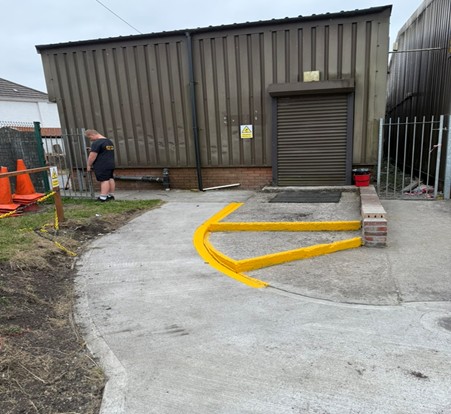
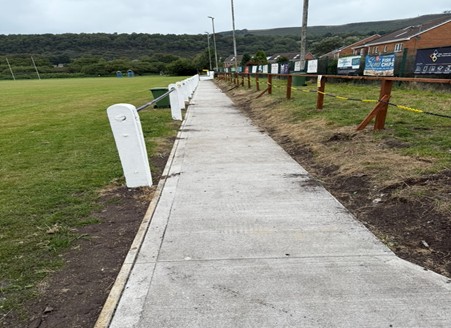
Access to wheelchair users facilitated
Subs dug outs installed

Minis & Juniors 2025/26
Sev Singh would like to introduce himself:
“Hi – my name is Sev Singh and I am the proud secretary of the Mini & Juniors at Skewen RFC. We currently have 9 M&J teams which is fantastic and that could not be achieved without the hard work and dedication of volunteers such as the managers and coaches. The children are also a credit as they continue to train and play games through the year with a smile on their faces.
My role requires me to liaise directly with managers, coaches, WRU and the club committee to allow the smooth running of the M&J section enabling children to enjoy, develop and learn the wonderful sport of rugby.
Rugby is important to me and has been a passion of mine from a young age. It allowed me to build friendships and life skills that I use still today such as being a team player, leadership and quick thinking when in a difficult situation.
The greatest achievement is seeing the children play with a smile on their face because win, lose or draw it’s about being out there with their friends next to them and I know Skewen is proud of each player and volunteer for the effort and fantastic job they do.”

Common injuries
Let’s not forget, rugby is a game for the rough and tough – men and women who take the knocks without complaining. Here are two examples of the sort of injuries that incur:


There’s a scar matching this on the right shoulder!
Common Knee Injuries in Rugby
1. Anterior Cruciate Ligament (ACL) Tears
◦ Often occur during sudden stops, pivots, or awkward landings.
◦ Can be non-contact or result from a tackle.
◦ Symptoms: a popping sound, swelling, instability.
2. Medial Collateral Ligament (MCL) Injuries
◦ Caused by a direct blow to the outside of the knee.
◦ Common in tackles or rucks.
◦ Pain and swelling on the inner side of the knee.
3. Meniscus Tears
◦ Result from twisting or turning on a bent knee.
◦ Can happen during scrums or when changing direction quickly.
◦ Symptoms include locking, clicking, or pain during movement.
4. Patellar Dislocation or Tendonitis
◦ Dislocation often follows a direct blow or sudden twist.
◦ Tendonitis (jumper’s knee) stems from repetitive jumping or sprinting.
5. Posterior Cruciate Ligament (PCL) Injuries
◦ Can occur from a direct blow to the front of the knee (e.g., falling on a knee)
Common Shoulder Injuries in Rugby
1. Acromioclavicular (AC) Joint Separation
◦ Caused by a fall onto the shoulder or an outstretched arm.
◦ Involves damage to the ligaments holding the AC joint together.
◦ Symptoms: pain at the top of the shoulder, swelling, and visible deformity.
2. Shoulder Dislocation
◦ Occurs when the head of the humerus is forced out of the shoulder socket.
◦ Often results from a direct blow or awkward tackle.
◦ Can damage surrounding ligaments and nerves.
3. Rotator Cuff Tears
◦ Involves tearing of the muscles and tendons stabilizing the shoulder.
◦ Caused by repetitive strain or acute trauma during tackles or scrums.
◦ Leads to weakness, pain, and limited range of motion.
4. Labral Tears (SLAP Lesions)
◦ Damage to the cartilage rim (labrum) around the shoulder socket.
◦ Common in overhead movements or forceful impacts.
◦ Symptoms include clicking, instability, and deep shoulder pain.
5. Fractures (Clavicle or Scapula)
◦ Result from high-impact collisions or falls.
◦ Clavicle fractures are more frequent due to its exposed position.
Captains Board

SRFC – Chairman, Vice Chairman, Secretary & Treasurer
These were obtained from Members’ Season Ticket booklets and imperfect memories.
| Season | Chairman | Vice Chairman | Secretary | Treasurer |
| 1921/22 | WP Jenkins | Fred Joseph | Tom Thomas | Tom Rees |
| 1924/25 | Dr TF Reason | Harry Rees | WP Richards | Tom Rees |
| 1933/34 | TC Powell | Nat Thomas | WP Richards | ST Jones |
| 1935/36 | Tom Lloyd | DF Jones | F Phillips | |
| 1948/49 | WMB Thomas | HN Bendle | G Richards | |
| 1952/53 | Harry Rees | TJ Howells | DW Thomas | G Richards |
| 1958/59 | Harry Rees | Idwal John | DW Thomas | GJ Oliver |
| 1959/60 | Harry Rees | Idwal John | DW Thomas | GJ Oliver |
| 1960/61 | Harry Rees | Idwal John | DW Thomas | GJ Oliver |
| 1962/63 | Frank Williams | Harry Rees | DW Thomas | GJ Oliver |
| 1965/66 | AJ Hughes | Glyn Wms | Brian Wolfe | Eddie Young |
| 1966/67 | AJ Hughes | Glyn Wms | Brian Wolfe | Eddie Young |
| 1967/68 | TT Griffiths | FG Williams | Brian Wolfe | Eddie Young |
| 1968/69 | TT Griffiths | FG Williams | Brian Wolfe | Eddie Young |
| 1969/70 | TT Griffiths | FG Williams | Brian Wolfe | Eddie Young |
| 1970/71 | H Tristham | FG Williams | Brian Wolfe | Eddie Young |
| 1971/72 | H Tristham | FG Williams | Brian Wolfe | Eddie Young |
| 1972/73 | H Tristham | W Davies | Brian Wolfe | Eddie Young |
| 1973/74 | H Tristham | V Charles | Brian Wolfe | Eddie Young |
| 1974/75 | H Tristham | V Charles | Brian Wolfe | Eddie Young |
| 1975/76 | H Tristham | Brian Wolfe | Eddie Young | |
| 1976/77 | H Tristham | Brian Wolfe | Eddie Young | |
| 1977/78 | H Tristham | Brian Wolfe | Eddie Young | |
| 1979/80 | H Tristham | Brian Wolfe | Eddie Young | |
| 1980/81 | D Jones | Wilf Davies | Eddie Young | |
| 1982/83 | D Jones | Wilf Davies | Eddie Young | |
| 1983/84 | D Jones | |||
| 1984/85 | D Jones | |||
| 1985/86 | D Jones | |||
| 1986/87 | Hywel Davies | |||
| 1987/88 | Hywel Davies | |||
| 1988/89 | Hywel Davies | |||
| 1989/90 | Hywel Davies | Neil Ranft | ||
| 1990/91 | Malcolm Rogers | Neil Ranft | ||
| 1991/92 | Malcolm Rogers | Steve Morris | ||
| 1992/93 | Malcolm Rogers | Eddie Young | Steve Morris | |
| 1993/94 | Malcolm Rogers | Kevin Jones | Steve Morris | |
| 1994/95 | Malcolm Rogers | Kevin Jones | Steve Morris | |
| 1995/96 | Malcolm Rogers | Kevin Jones | Steve Morris | |
| 1996/97 | Steve Morris | |||
| 1997/98 | Steve Morris | |||
| 1998/99 | Eddie Young | Steve Morris | ||
| 1999/20 | Steve Morris | |||
| 2000/01 | Steve Morris | |||
| 2001/02 | Mike Beynon | Kevin Jones | Steve Morris | |
| 2002/03 | Neil Ranft | Steve Morris | ||
| 2003/04 | Steve Morris | |||
| 2004/05 | Barry Davies | Neil Ranft | Steve Morris | |
| 2005/06 | Barry Davies | Neil Ranft | Steve Morris | |
| 2006/07 | Barry Davies | Neil Ranft | Steve Morris | |
| 2007/08 | Barry Davies | Neil Ranft | Steve Morris | |
| 2008/09 | Barry Davies | Neil Ranft | Steve Morris | |
| 2009/10 | Barry Davies | Neil Ranft | Steve Morris | |
| 2011/12 | Barry Davies | Neil Ranft | Steve Morris | |
| 2012/13 | Barry Davies | Rachel Hopkins | Steve Morris | |
| 2013/14 | Barry Davies | Rachel Hopkins | Steve Morris | |
| 2014/15 | Dr R Tristham | Rachel Hopkins | Steve Morris | |
| 2015/16 | Dr R Tristham | John Grimes | Rachel Hopkins | Steve Morris |
| 2016/17 | Dr R Tristham | John Grimes | Rachel Hopkins | Steve Morris |
| 2017/18 | Dr R Tristham | John Grimes | Rachel Hopkins | Steve Morris |
| 2018/19 | Dr R Tristham | John Grimes | Rachel Hopkins | Steve Morris |
| 2019/20 | Dr R Tristham | John Grimes | Rachel Hopkins | Steve Morris |
| 2020/20 | Dr R Tristham | John Grimes | Rachel Hopkins | Steve Morris |
| 2021/22 | Dr R Tristham | John Grimes | Rachel Hopkins | Steve Morris |
| 2022/23 | Dr R Tristham | John Grimes | Rachel Hopkins | Steve Morris |
| 2023/24 | Dr R Tristham | John Grimes | Rachel Hopkins | Steve Morris |
| 2024/25 | Dr R Tristham | John Grimes | Rachel Hopkins | Steve Morris |
| 2025/26 | Dr R Tristham | John Grimes | Scott Pickin | Steve Morris |
Notes
- In 1921/22 the club’s headquarters was Colliers Arms.
- In the early years the title Esq was appended to a man’s name . The historical context for esquire referred to a young nobleman who, in training for knighthood, acted as attendant to a knight. There is no record of any of the officers named above becoming a knight.
- Also, Club Secretaries were known as ‘Hon (Honourable) Secretary’. The title “Honorary Secretary” was traditionally used in British clubs, societies, and associations to denote a volunteer who handled administrative duties without pay. It was common in the 19th and early 20th centuries, especially in sporting, civic, and academic organisations.
- A Handbook dated 1953 states that the Secretary shall be given an honorarium of £60 per annum.
- In 1965/66 the cost of a Membership Card and Season Ticket for Ladies, Boys and OAPs was 5/- shillings pre-decimal that’s around 25 pence post decimal equivalent. (Decimal currency was introduced on 15/02/1971 a day known as Decimal Day. The old system: £1 = 20 shillings, 1 shilling = 12 pence (so £1was 240 pence) The new system: £1 = 100 new pence.
- The members season ticket for 1967/68 – 14 Patrons, 3 doctors, and at least 64 Vice Presidents, some of whom were women.
Season Ticket 1974/75 – £1. Ladies, Boys & OAP – 25p, Playing Member – £1, Youth 50p